Home is more than walls and shelter—it is safety, belonging, and continuity. Every living being, from the smallest insect to the largest mammal, has its own way of building a sanctuary.
Some construct intricate dwellings, while others turn their own bodies into living structures. By observing these patterns, it becomes clear that the idea of home extends far beyond human life.
Home as a Place of Connection
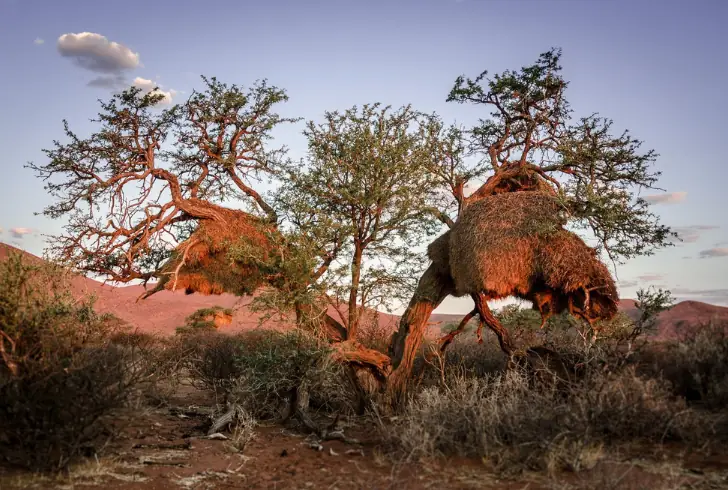
In every corner of the natural world, the meaning of home reflects community. Sociable weavers in southern Africa create massive nests woven from sticks and grass. These nests can weigh up to 2,000 pounds and contain hundreds of chambers, housing generations of birds together. Their homes are more than protection—they are living communities where safety comes through shared presence.
Prairie dogs on the Great Plains follow a similar instinct for connection. Their underground towns stretch across miles, with tunnels dedicated to nurseries, food storage, and shelter from predators. The largest known colony covered 25,000 square miles and supported millions of animals. These towns prove that a true home is not just where one lives, but where kinship thrives.
Home as Shelter and Security
For some, home is a fortress against uncertainty. Army ants build moving cities called bivouacs, formed entirely from their own bodies. These living structures include tunnels, chambers, and air vents, designed to protect the queen and her offspring. The collective body becomes both a home and a defense.
Prairie dogs also design their burrows with purpose. They engineer their systems to withstand floods, fires, and shifting weather. A home must endure, offering stability when the outside world changes.
Home as Beauty and Wonder
Not all homes are built solely for function. On the ocean floor, the white-spotted pufferfish creates intricate circular patterns in the sand. These designs serve as nests for eggs, but they are also art forms—geometric shapes that regulate oxygen flow and reduce stress on the young. Beauty itself becomes part of the architecture, showing that home can be a place of creativity as well as care.
The artistry of such homes highlights an often-overlooked truth: a home is not only about survival. It can also be a place that nurtures joy and wonder.
Home as Belonging

The word “eco” comes from the Greek “oikos,” meaning house or home. This root reminds us that the earth itself is a shared dwelling for all beings. Whether it is a bird nest, an anthill, or an apartment filled with light and memory, each home reflects the universal need for safety, continuity, and belonging.
Across ecosystems, homes reveal different forms yet share the same essence. They protect life, connect communities, and hold beauty. Above all, they remind us that home is not limited to a single place. It is wherever living beings gather, create, and find refuge.
Why Home Matters
A home is not only about physical shelter—it is about identity and survival. Every species shows a deep drive to create a safe haven, proving that home is a necessity woven into the fabric of life. To lose a home, whether through destruction of habitat or displacement, is to lose a vital part of existence.
Protecting the idea of home—both human and ecological—ensures that life continues to flourish. The world itself is a shared sanctuary, one that requires care and respect. Recognizing this truth turns the concept of home into something far greater than a structure: it becomes a reminder of connection, security, beauty, and belonging.