Australian biotech company All G is gaining attention for exploring how breast milk protein—specifically lactoferrin—can support dermatological applications. By producing both bovine and human milk proteins through precision fermentation, the company is paving the way for cleaner, animal-free skincare ingredients backed by scientific evidence.
Exploring Milk Proteins for Skin Health
Milk-derived proteins like lactoferrin have long been recognized for their nutritional and protective benefits. Traditionally linked to immune health and iron regulation, lactoferrin is now drawing attention for its effects on the skin—reducing inflammation, fighting microbes, balancing the skin’s microbiome, and defending against oxidative stress.
All G’s LFX, a precision-fermented form of lactoferrin, is produced entirely without animal or human milk, reflecting the industry’s shift toward sustainable and ethically sourced ingredients.
Jan Pacas, founder and CEO of All G, explains that the biological properties of milk proteins offer strong potential in supporting the skin barrier and improving hydration. Early preclinical data, he adds, shows that lactoferrin can reduce acne lesions, boost moisture levels, and strengthen the skin’s defenses—making it an ideal active for modern serums, creams, and cleansers.
Scientific Findings and Skin Benefits

All G’s research, conducted at the Shanghai Jiao Tong University Affiliated Sixth People’s Hospital, revealed notable dermatological benefits. Tests on skin cells demonstrated:
1. A 25% reduction in inflammatory cytokines, indicating strong anti-inflammatory potential.
2. A 30–40% boost in collagen production, suggesting visible anti-aging benefits.
3. Lowered β-galactosidase activity, a marker of cellular aging.
4. Increased expression of filaggrin and AQP3 genes, both essential for maintaining hydration and barrier integrity.
These results reinforce lactoferrin’s potential as a multi-action skincare ingredient, working across hydration, barrier repair, and inflammation control.
Precision Fermentation and Clean Innovation
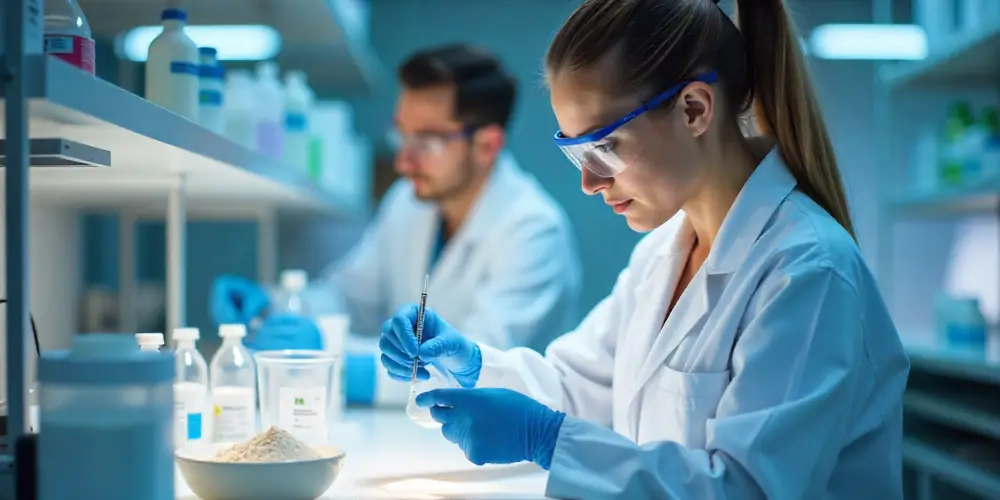
All G uses precision fermentation to create pure recombinant lactoferrin. Instead of extracting it from cow’s milk, food-grade yeast is engineered to produce the same protein in a controlled, animal-free process. The yeast grows in stainless-steel tanks, secretes the protein, and the final product is purified to ensure safety and quality.
“The outcome is a recombinant bovine lactoferrin identical to the natural form, produced without animals or milk,” explains Pacas.
By using fermentation rather than dairy production, this process reduces strain on land and water resources and eliminates methane output altogether. It also ensures a steady, controlled ingredient supply with consistent purity.
Dr. David Orchard of the Royal Children’s Hospital and University of Melbourne notes that while studies are ongoing, “early evidence points to lactoferrin’s potential in treating inflammatory skin conditions and promoting barrier repair,” reflecting traditional uses of breast milk for skin healing.
Ethical and Eco-Responsible Production
The fermentation route offers major sustainability benefits, eliminating animal involvement and minimizing ecological impact. Pacas highlights that the process adheres to strict safety protocols and produces a pure, animal-free protein suited to the demands of modern, ethical beauty.
This innovation fits perfectly with the clean-label trend and consumer interest in transparent, cruelty-free ingredients. “Reliable, scalable production makes lactoferrin a game-changer for formulators,” says Pacas.
Broad Potential in Dermatology

Beyond daily skincare, lactoferrin holds therapeutic promise. Research suggests it can:
- Reduce acne flare-ups and oil imbalance.
- Aid psoriasis treatment through immune regulation.
- Enhance antifungal remedies for infections such as Candida.
Thanks to its antimicrobial and antioxidant profile, lactoferrin helps keep formulations fresh without synthetic preservatives. All G’s LFX is lactose-free, ensuring compatibility with sensitive or intolerant skin.
The company will debut its bovine lactoferrin powder later this year and plans to release a human version in early 2026. With regulatory approvals already secured in China, Japan, and South Korea, the ingredient’s expansion in global skincare markets is well underway.
The Future of Milk Proteins in Skin Care
The fusion of biotechnology and dermatology is creating new opportunities for more ethical, effective skincare. All G’s fermentation-based milk proteins represent a shift toward sustainable science-driven beauty, blending nature’s biology with innovative production methods.
As clinical testing advances, lactoferrin’s ability to support skin health—from hydration to barrier restoration—positions it as a potential key ingredient in the next generation of skincare formulations.
By rethinking how essential bioactive proteins are sourced, All G’s approach could redefine what it means for skincare to be both scientifically advanced and environmentally responsible.