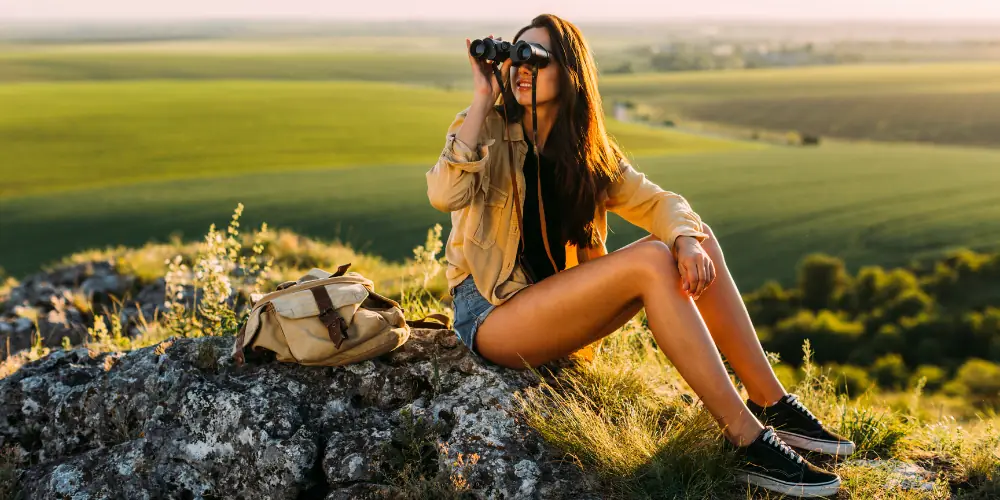
A new term is circulating across social media and changing how people talk about the outdoors. “Hot girl hiking” has spread quickly on TikTok and Instagram, encouraging many new hikers to hit the trails while also stirring frustration within parts of the hiking community.
To some women, the phrase feels empowering. It reflects confidence, visibility, and a sense that women can show up outdoors however they want. Others hear something different—a reminder of the pressure placed on women to meet certain appearance standards. The discussion has become layered and, at times, heated.
What “Hot Girl Hiking” Means
Search the phrase on TikTok, and a familiar style appears. Young women stand on ridgelines and overlooks wearing matching sets—crop tops, biker shorts, sports bras, skorts, and polished activewear. The mountains serve as a backdrop. The light is perfect. Every clip feels carefully composed for the camera.
Popular culture has leaned into the idea as well. When Lady Gaga stepped through the Hamptons wearing Christian Louboutin stilettos, Vanity Fair jokingly called it a “hike.” When Vanessa Hudgens appeared on a trail in a maxi skirt and platform slides, the moment landed in the same conversation. The look seemed to matter just as much as the activity itself.
Still, the phrase means more than the polished images suggest.
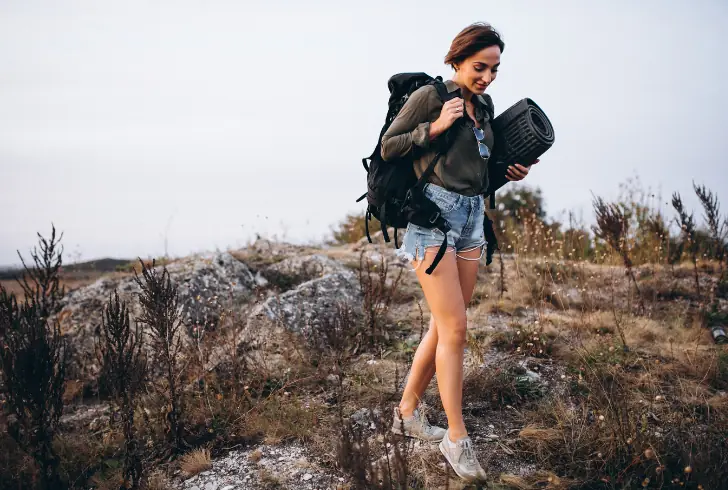
“Hot girl hiking” grew from the earlier “hot girl walking” trend. At its core, it often means feeling attractive and confident while moving outdoors. That confidence may show up in clothing choices. It may also show up as an attitude.
One hiking enthusiast described it as an “emotional aesthetic,” where a woman gives herself permission to hike alone and feel bliss “unobserved, undisturbed, and unbelievably hot.” In that version, the look matters less than the mindset.
The phrase, then, lives in two spaces:
1. A visual trend shaped by social media.
2. A personal state of self-assurance on the trail.
Both interpretations coexist, and both spark strong reactions.
The Tension Inside the Outdoor Community
Outdoor culture has wrestled with questions of belonging for decades. Access has often been shaped by race, gender, ability, and gear. The traditional image of the rugged outdoorsman excluded many people from the story of who “belongs” outside.
That history makes new appearance-based standards feel loaded.
Teaghan Skulszki, social media manager for GearJunkie and a former Outside staffer, explained that “niche outdoor influencers put on a different kind of messaging and tone.” Instead of pure aesthetics, they share practical advice: “These are my Patagonia baggies that I wear every summer. This is the gear that I’m buying. Here is my favorite trail: hot girls leave no trace.”
In this version, the aesthetic draws attention, but the content teaches preparedness and stewardship. Style becomes a gateway, not the main point.
Still, critics worry about what happens when “hot” becomes the visible benchmark. Pressure to look a certain way has long shaped women’s experiences in gyms, offices, and social spaces. Adding that pressure to hiking can feel exhausting.
At a children’s birthday party, the phrase caught a group of outdoor-focused mothers off guard. One former senior leader at REI questioned whether adding “hot” to hiking aligns with REI’s long-standing mission to make the outdoors accessible to everyone. If inclusion is the goal, does tying participation to attractiveness complicate that mission?
Another woman said the phrase made her “instantly mad,” pointing out that women already police their bodies and faces. Hobbies, she argued, should exist “unperceived.”
Consumerism, Gear, and Accessibility
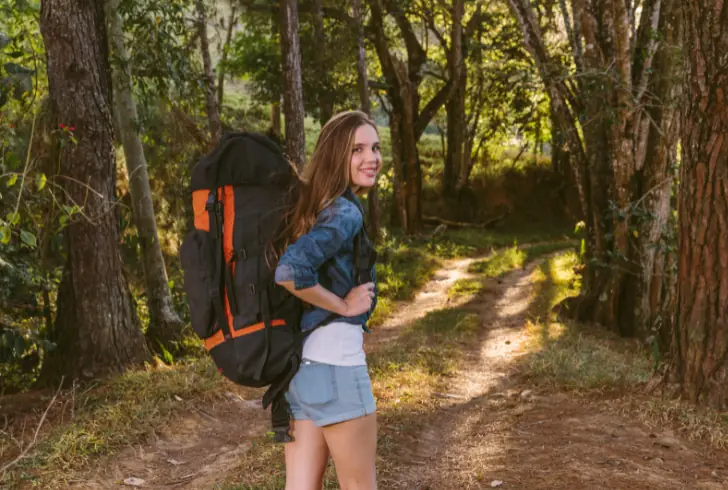
Social media trends often carry a shopping list. Coordinated sets, trending brands, and photogenic gear can shape expectations. That creates friction for hikers who value simplicity.
Mariana Morales, a 27-year-old avid hiker who moved to Seattle from Queretaro City, Mexico, said she “honestly doesn’t believe in having the fittest body or most expensive gear to go and hike with friends.” She warned that leaning too heavily into social trends can shift attention toward consumerism instead of stewardship and the peace that nature offers.
On the other hand, Leah Greenberg, senior geology major and president of the University of Kentucky’s hiking club, focuses on access. Her goal is to create a space where people of any background and ability level feel that the outdoors can belong to them “for free.” That mindset reframes the trend. If a playful label draws someone onto a trail for the first time, it may serve a purpose.
Skulszki added that the responsibility of outdoor enthusiasts is to “bring more people into our group,” teaching and opening up the space rather than rejecting someone based on aesthetic choices.
Meanwhile, apparel brands have expanded options. Hiking gear now includes more colors, cuts, and silhouettes that reflect a “girly” sensibility. For some, that shift feels overdue. For others, it blurs the line between function and fashion.
Style vs. Safety
Clothing choices raise cultural questions. Footwear raises physical issues.
Images of stilettos or platform slides on trails may gain clicks, but experts draw a clear boundary when safety comes into play. Dr. Emily Reasnover, PT, DPT, explained that she “would not encourage wearing stilettos or platform shoes to hike.”
Uneven terrain activates the smaller stabilizing muscles in the ankles. These muscles work harder to maintain balance and neutral positioning. They also fatigue quickly on unpredictable ground. As Dr. Reasnover noted, this increases the risk of ankle sprains and strains. Her recommendation was direct: wear a supportive shoe for hiking.
The message does not challenge self-expression. It highlights biomechanics. Trails demand stability. Proper footwear supports that demand.
A Trend With Two Possible Outcomes
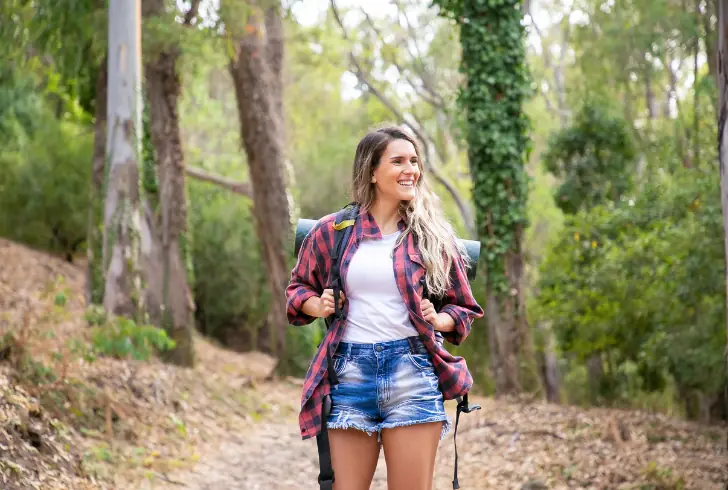
“Hot girl hiking” has the potential to welcome new hikers or create fresh divisions. The direction it takes will largely depend on how the broader hiking community responds.
If the phrase motivates people to try the outdoors, learn responsible trail practices, and build confidence outside, it broadens participation. But if the emphasis shifts too heavily toward looks and perfectly staged photos, it can unintentionally set another standard that people feel pressured to meet.
Trails have always held space for many kinds of hikers. Some arrive in scuffed boots after years of experience. Others step out in coordinated activewear and enjoy a slower pace. Some prefer solitary hikes, while others gather friends and turn the walk into a social ritual.
What really matters is not whether someone appears “hot” on a mountain path. The deeper question is whether that path feels open to them.
Redefining Belonging on the Trail
The idea of “hot girl hiking” reflects a mix of confidence, consumer trends, and shifting community norms. Social media has a way of reshaping culture—even in places traditionally seen as simple or untouched, like hiking trails. At the same time, the trend highlights familiar debates about who belongs outdoors.
Certain basics remain unchanged. Proper footwear, enough water, and respect for the environment are far more important than how someone looks. Beyond those essentials, the conversation returns to inclusion. Trails work best when they welcome a wide range of people without imposing new expectations about appearance.
The outdoors has never required a dress code. What it asks for instead is respect for the land and consideration for the people sharing it.